Sunday, 10 March 2019

Lapworth Museum

We visited Lapworth Museum to learn about skeletons and fossils in a little more detail - mainly to see the allosaurus on display!

The museum doesn't open until 12pm on a weekend (I thought it opened at 10am ) so we arrived on campus half an hour before opening time... But alhamdulillah the weather was fine so we used the time for a quick trip down memory lane - we walked through the university centre (where everything was closed lol) and up the stairs to one of the lecture theatres, but it was locked! And past the Old Gym (which isn't so old anymore!) where my husband and I met. 💕😂 The campus was pretty much dead when we arrived but by midday lots of people started arriving - so we used all this for a short discussion about uni life and student habits. 😀


Inside Lapworth, we looked at all the skeletons on display - revising our work on herbivores/carnivores and using fossils for clues. F had recently asked if there were any flying dinosaurs to which I'd answered pterodactyl, and fortunately there was one on display hanging from the ceiling.

allosaurus cast

pterodactyl cast

allosaurus skull - feel its teeth!

another carniverous dinosaur...

hippopotamus skull

Most of the exhibits just showed parts of the skeleton as opposed to the whole thing, eg the femur of a stegosaurus, so there were some good opportunities to revise bone names and find the equivalent on their own bodies.

Surprisingly for me though, the part of the museum they enjoyed the most was looking at all the different rocks and gemstones upstairs!

rock wall - feel and describe their textures!

my favourite stone because it's my favourite colour~
their feedback in the bottom right!

We managed to look around the whole museum comfortably in just over an hour. Definitely somewhere worth visiting again next time we're on campus or when it ties in with another topic inshaAllah!

When we got home, I put out the Fossils book we have:
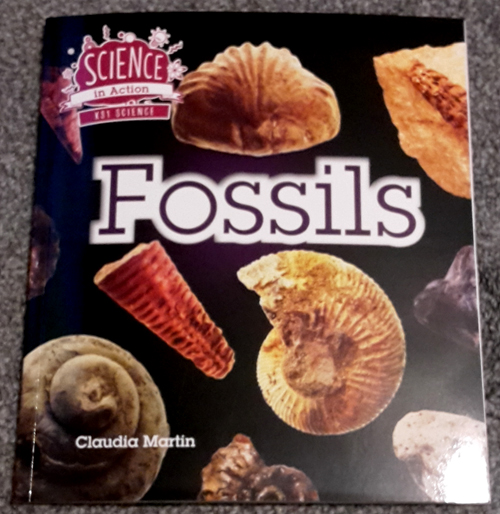

I really like this book series, but this served as a reminder how careful we need to be with the educational material we give to our children - especially when it looks like a trusted source - since the last few pages of the book are dedicated to the theory of humans evolving from apes and present it as non-disputable fact:


I don't wish for the girls to grow up sheltered, so I thought since it came up we may as well discuss it. Rather than censor the page completely, I decided to stick some flaps over the top instead with the following:


So the girls can still see the information underneath, but they can treat it in the same way as they treat beliefs from other religions.

We also spoke a little about scientific theory and how the principle is correct, to have a prediction and look for evidence (just like we do for our experiments!), but how important it is not to have preconceived biases or we end up with the wrong conclusions.

Friday, 8 March 2019

Recipe: Chocolate Shortbread


Ingredients:
175g salted butter (softened)
90g caster sugar
200g plain flour
2 tbsp cocoa powder
100g chocolate chips

Method:
1) Cream together the butter and sugar until light and fluffy.
2) Sift in the flour and cocoa powder, stirring together to form a soft dough. (Add chocolate chips at this point, if using). Keep stirring the dough together until it comes away clean from the sides of the bowl.
3) Leave the dough to chill in the fridge for at least 20 minutes.
4) Preheat oven to fan 180C and line 2 baking trays.
5) Roll out the dough, cut into shapes and place onto trays.
6) Bake for 10-12 minutes. Leave to cool on the tray to firm up. Decorate once cool, if desired.

For these biscuits, we decorated them with melted white chocolate (part of our work on skeletons!). I made the cone out of the same greaseproof paper I lined the trays with. 😊

Stories from other cultures - 1 - Africa

This term for Literacy, we're doing a whistle-stop tour of the (non-Western) world to tick off the suggested NC target of stories from other cultures. Each week, we'll go to the library (and I'll check online) for books and stories for that part of the world and then do a few activities to help them learn about and appreciate that culture a little more.

...I have to keep reminding myself the twins are still only 5! So a very basic overview is enough at this point - there'll be plenty of time in the future, inshaAllah, to do each country more justice! I feel like I definitely have to mention that at this point as this week was just spent looking at Africa as a whole, when obviously it's a whole continent, but concentrating more on central and southern Africa. 🙈

I chose to start with Africa as there's an abundance of children's books either set in the savannah or using safari animals (e.g. The Ugly Five), so it kind of feels familiar to them. Also, their paternal grandparents were born in Mozambique and Uganda, so they have some connection to the continent too.

We started off by finding Africa on their world map and globe, and also looking up individual countries (ones they knew and ones which came up in the library books) in their children's atlas. We talked about how Africa is a continent with lots of different countries inside it. We talked about the kind of climate it has and which kinds of animals are found in the wild there.

Three of the library books which really stood out as perfect teaching material were: Mama Panya's Pancakes, Baby Goes to Market and Grace & Family, set in a traditional Kenyan village, a west African marketplace and a Gambian compound respectively. They opened up lots of discussions on village life, different foods and also different families.

In order to paint a fair picture, I thought it was important to point out to them that Africa is a vast continent and it isn't all villages! So we looked at some pictures online of big cities, such as Nairobi, so they could see the similarities between there and a city here such as London.

After all our reading and discussions, two things in particular stood out as being different from here: the clothes people in the books wore and some of the foods they ate. So I planned two related activities based on this. 👌

1) The girls designed their own African inspired prints, based on the illustrations in the books. We looked at a couple of the books again, flicking through the pages to talk just about the pictures and what people were wearing: we used lots of good vocabulary to do with pattern, shape and colour. The conclusion the twins came to was that they wore bright colours with big designs on them, both the men and the women! And they listed out the kinds of common patterns too, such as animal print, stripes, spirals and flowers.

I then printed out a simple template with three outlines of a dress on it (short sleeved like all the dresses in the books!) and one square blank for them to draw their own clothing of choice.


You can download the template here.

MashaAllah, Z is getting a lot better at pen/brush control and is enjoying copying her sisters! I was really pleased with her efforts and desire to join in. 💕

So they used wax crayons first to draw their designs, then watercolours over the top to colour the dresses in - continuing the watercolours theme lol. I did one alongside them as an example, and because it looked fun and I wanted to. 😂

We then watched a couple of episodes of Tingatinga (in Arabic! for listening practise 😀) and talked about the designs of the animals - they weren't coloured realistically, but the patterns were traditionally African. This also doubled up as another example of stories from the African culture.


2) We had a go at making some of the foods in the books, namely the pancakes from Mama Panya's Pancakes (recipe in the back of the book!) and some chin chin biscuits from Baby Goes to Market. The pancakes didn't turn out so great (the batter is using water and I had trouble frying them 🙈) but the chin chin biscuits were a hit. 👍


I followed the recipe from this website but substituted vanilla essence for nutmeg and baked for around 20min at fan 180. The quantities made 45 biscuits, so I sprinkled granulated sugar on 15, demerara sugar on 15 and left 15 plain before baking.

They taste a bit like scones, but crunchy - and after looking up a scone recipe I found they're very similar! - and are usually fried rather than baked, which I can imagine would taste less dry... But I didn't have enough oil and wasn't keen on frying them to begin with anyway. 😀

Next week, we're going to look at northern Africa and the middle East, inshaAllah. 🌍

Tuesday, 5 March 2019

Skeletons (& Fossils)

Following on from our work on teeth, I thought it made sense to look at the skeleton next!

We read through some books on the subject and talked about what they already knew.

Then, we worked through the following worksheets together:


Some notes about the pages...

1) I picked out a few bones I thought were the most prominent... I decided against naming the individual arm and leg bones at this point - it's enough for me for now they just recognise there are bones in their arms and legs! I deliberately left the lines off for them to draw themselves, so I could check their understanding more. Once they were done, I asked them how they could make their diagram clearer? M said straightaway to colour it in and F immediately chimed in with, "Like the teeth diagram last time!" 👍

2) The pictures at the bottom of this sheet are meant to be clues. So a blob, i.e. no structure (skeleton provides a frame and support), a shield, i.e. protection (it protects our soft internal organs), and a statue, i.e. no movement (skeleton has joints for movement).

3) MashaAllah, they guessed straightaway the bottom skeleton was a horse! There was some debate over which was the cat and which was the dog, but then they looked at the tails and both agreed the top one was the cat. 😁

4) I wanted to use this opportunity to practise their scientific thinking. We talked about dinosaurs being extinct so there are no real life examples around nowadays for us to look at, so how do we know what they were like? By using knowledge we have from other things as ideas (look at the animals alive today which are carnivores!) and looking carefully at e.g. the dinosaurs' skeletons for clues. For the question about the stegosaurus' tail, F said, "Maybe it used it for killing other animals..." to which I was impressed but thought I'd ask to check what she meant... Why would a herbivore want to kill other animals? "Because it wanted to give them to the tyrannosaurus to eat!" Lol. A bit more discussion about what the T Rex might have eaten and she came to a different conclusion herself. 😂

You can download our worksheets here.


While they were working through, I had the sudden inspiration to make gingerbread men but to decorate them by drawing skeletons with white icing. I explained my idea to them to see what they thought... What could we use to draw the skeleton with? Icing or white chocolate? They decided chocolate... But instead of gingerbread, what kind of biscuit should we make to make the white chocolate stand out? M said a black one. 😂 So I suggested chocolate... They agreed. 😋 I've not tried making chocolate shortbread before, but these turned out ok! Will make a separate post soon for the recipe, inshaAllah.

Finally, we made model skeletons using the template in the link above.


We did this activity on a different day as a kind of revision.

First, I asked the girls to colour their skeletons in but using a different colour for each different bone (and the same colour for bones which were the same!). As they coloured, we talked about which bone they were colouring to reinforce the new vocabulary, as well as casually introduce a few more (e.g. breastbone, shoulder plates, kneecaps, etc.). Even though teeth are part of the skeleton, they're not bones so not coloured in. 😁

Before they cut the pieces out, I explained what the end product was supposed to be and held the paper up to ask if they thought the material was strong enough... F said no, it was too flexible! 👍 So how could we make the paper stronger? F said to stick it onto card - so we did. After gluing the whole sheet onto a piece of A4 card, the girls cut the bones out.

I helped Z with her cutting, but she did all the colouring herself!

Once they were done, I asked the girls to lay their skeletons out flat, putting the bones together like a jigsaw.

Finally, I took out the split pins and demonstrated using one to join two of Z's pieces together. I used a sewing pin to make a small hole to make it easier to push the split pins through, then let the twins get on with putting their skeletons together by themselves. Z handed me pins and I asked for her approval before joining each piece. 😂

Monday, 4 March 2019

Prophet Musa (AS) - 1 - As a baby

We read the beginning of the story of Prophet Musa (AS) together, from the books which we have, focusing on his mother putting him in the river and how Allah not only kept him safe but also reunited them together - the morals I wanted the girls to understand from this part of the story were 1) to trust in Allah and 2) if Allah wants something to happen, there's nothing anybody can do to stop it from happening.

We talked about how Prophet Musa's mother must have felt when she gave birth to a boy and knew the soldiers would kill him if they found him... We talked about whether it was easy for her to put her baby in the river - because what might happen to him in the river? But what would happen to him if she didn't do it? We related it to baby A (who's now almost 8 months mashaAllah!) and how they would feel having to do that to her - and mothers love their children a lot more than siblings love each other! But where did the idea come from in the first place? It was from Allah so Musa (AS)'s mother trusted it would be ok... And it was!

Since it came up, we had a brief biology lesson into why Firaun's wife needed a nurse for the baby... By "nurse" the book meant "wet nurse" and a wet nurse is a woman who breastfeeds the baby for the mother - maybe the mum can't feed the baby herself for whatever reason (no milk, not enough milk, too busy, doesn't want to!) and in those days they didn't have baby formula and bottles! So why couldn't Firaun's wife feed baby Musa? Because women don't make milk all the time, only after they've had a baby. Firaun's wife hadn't had the baby so that's why she needed a wet nurse for him - and Allah brought Musa (AS)'s mother back to him in this way.

For our craft activity, to help them remember the story, I thought of a simple pop-up type picture - similar to the zamzam picture we did before. I drew my idea on the whiteboard so the twins knew what the end product was supposed to look like:


Then they painted their picture onto white card. We used watercolours again (it feels like watercolours have turned into the art theme for now!) and talked about blending different shades, the direction of their brush strokes (F said they should be horizontal for the river and vertical for the grass!) and how they could layer the paint as it dries.

While the paintings dried, they drew, coloured and cut a picture of a basket from some brown card and sellotaped the back to a blue pipe cleaner. A lolly stick would have been better, but I've still not got round to buying more yet! But this was a good chance to recap materials: we talked about what the problem was (it was too flexible!) and how they could fix it (make it shorter... make it thicker...) - they ended up folding it in half and twisting it about itself which made it a bit more sturdy.

I cut a line along the centre of the river so they could thread their pipe cleaner through and so move the basket by using the pipe cleaner as a handle. Finally, I asked them to write a sentence to summarise what the picture showed.


MashaAllah Z did well, copying her sisters! I think this is the first painting she's done which has actually resembled something and not just a brown mess. 😂


Sunday, 3 March 2019

Teeth, teeth, teeth

Time to start a new Science topic! This half term, I wanted to do more about the human body - because the girls have started asking questions (How do we breathe? Why does exercise make me tired? What are our hearts for?) and it'll tick off a few of the NC targets for Year 2 to do with health, hygiene and living things.

To begin with, I thought we'd look at teeth because within the past couple of weeks F has got her first wobbly tooth (went to the dentist to make sure because I wasn't expecting it to happen for at least another year!) and M has got an adult tooth growing in behind her bottom incisors despite not having any teeth wobbly yet (yep, got the dentist to check this too and apparently very common! The adult tooth should force the milk teeth out, only rarely when it doesn't would they need to extract the baby teeth, so inshaAllah M won't need that to happen!) - lots of questions about what's going on in their mouths from them! So I thought it simplest just to do a couple of lessons on the subject instead of simply answering them. 😀

We began by looking through our science collection then working through the following sheets together:


You can download our worksheets here.

For the first sheet, the diagram of the teeth, I asked them how they could make it easier to understand (referring back to how we made a diagram of asteroids, comets and meteors), because it was already a drawing and it had labels... The answer was to colour it so all the same kinds of teeth were the same colour. When they were done they commented that it was really quick to see which kinds of teeth were where now. 👍

Friday, 22 February 2019

Prophet Eesa (AS) & Miracles

As usual, we began by reading the different versions of Eesa (AS)'s story from the books which we have.

The girls are already a little familiar with Prophet Eesa (AS) as it's been brought up in discussion for the past couple of Christmases (What's Christmas? Who celebrates it? Why?) so this time I wanted to focus on the concept of miracles, using Eesa (AS)'s story as the example.

After reading the stories, I asked the twins what they thought the word "miracle" meant... After some talking, they decided it's "a thing that's not supposed to happen, is amazing and good!" I asked if they could think of any miracles to do with the prophets we'd looked at so far... They came up with Ibraheem (AS) being protected from the fire, Yunus (AS) surviving after being swallowed by a whale, and Adam (AS) being made from clay with no mother or father. 👍 But in Eesa (AS)'s story, there were a lot of miracles mentioned!

For our next session, which was a few days later, I asked them if they could remember any of the miracles to do with Eesa (AS) - the ones which came to mind straightaway for them were making a bird from clay fly as if it were alive, he spoke as a baby, and knowing what was in people's houses without looking. So I told them I wanted some more examples... so what could they do? Look in the books again! As they flicked through the pages, searching for the relevant ones, I told them what they were doing was called research and that I would make notes on the whiteboard as they found more information. After a while, the 8 miracles they came up with were:

- no father
- spoke as a baby
- knew what was in people's houses without looking
- bird from clay came to life
- dead people came back to life
- cured sick people
- made a blind man see again
- table of food sent from heaven

Next, I gave them a piece of white card each and told them to write the word "miracles" in the centre - demonstrating on Z's card. Around the edge, they then needed to choose at least 5 of the miracles on the board and draw a picture to represent each one... When they were done, they could either write what the miracle was themselves or I could do it for them (as I was explaining the task it seemed like they were getting overwhelmed, which is why I offered!) - in the end, they both asked me to do the writing. 😂 Before they started, we talked about the possible pictures they could draw (e.g. a speech bubble for Eesa (AS) speaking as a baby) because they weren't allowed to draw Eesa (AS) himself, or his mother, Maryam (AS)!

Finally, we took the watercolours out again so they could colour everything in. Why watercolours? Because they could thin the paint appropriately in order to paint over the top of the captions but still be able to read them! So they were practising experimenting with the ratio of paint:water and seeing the effect it had during this activity, too. They coloured in the centre bubble first, so it had time to dry as they did the rest of their painting, then I asked them to paint over the writing in a different colour - so this time they needed to make sure their watercolours were less watery to ensure they showed up!


As usual, Z did her own version! I wrote a caption in the corner of her page too, upon her request. 😂


As they worked, we had a little discussion about Prophet Eesa (AS) in Christianity... How he's known by the name Jesus and how Christians believe he's the son of God. Allah is God - can Allah have children? No! So why do Christians believe Jesus is God's son? Because normally, to get a baby inside a woman's tummy, you need a man, a husband to help - like Papa is Mama's husband and your father. But did that happen for Eesa (AS)? No, Maryam (AS) didn't have a husband! Allah just put a baby in her tummy just like that, because He can do anything! But the Christians, they thought if Allah, if God was the one who put baby Eesa (AS), baby Jesus in his mummy's tummy, then that must mean God is the father! So if God is his father and Jesus is God's son, that must mean Jesus is like God too! So Christians pray to Jesus and worship him too. Is that what Muslims believe? Is that what we believe? No! Eesa (AS) doesn't have a father; that's just one of Allah's miracles. And he's not Allah's son! But he is special because he's one of Allah’s prophets. Can we worship anyone or anything other than Allah? No!

As we spoke, I helped by drawing a simple diagram on the whiteboard, similar to the bottom branches of a family tree: crossing out the dad and writing Allah’s name as part of the tree when talking about Christianity, and crossing out the dad completely and writing Allah’s name separate when talking about Islam. We also briefly talked about people who are neither Christians nor Muslims and they don't believe in Eesa (AS) or Jesus at all - they think Maryam (AS) had a baby with a man who wasn't her husband and Eesa (AS) isn't special at all! But we know that's wrong because? Allah put Eesa (AS) in her tummy and Eesa (AS) is special because he's one of our prophets. 💕