To finish our topic on the body, following on from healthy eating and exercise, I decided to focus a little on the importance of good hygiene.
We found this amazing book at the local charity shop: I Know How We Fight Germs. It explains the processes in really simple language via a conversation between a little boy and his mum. I really like how it's done - especially as it differentiates between bacterial and viral infections by explaining the different mechanisms different white blood cells use, but without going into too much detail. I wish I'd read it during my Biochemistry degree actually! 😂 Can't recommend it enough if you have an interest in this area. 👍
We watched a couple of videos on YouTube of white blood cells eating bacteria and talked a bit about it...
The timing worked out that this was shared on one of the HE Facebook groups just as we started this topic. 😀 So we signed up to it and went along... It was a great introduction to clinical trials and drug testing! And the girls each received a certificate for taking part:
While at Thinktank, we visited the area dedicated to medicine. A lot of it was too difficult for them, but this game was really good! They had to stop the bacteria or viruses from invading the body by choosing the appropriate defender (e.g. cytokine, T-cell, etc.)
They also had a little display on immunisations, which we've discussed every time before they've needed one (i.e. some germs can make us really seriously ill - remember last time you had a cold or a fever? They can make you feel even worse than that! 100x worse! - so we have injections to put a tiny tiny bit of that germ in our body. Just enough for our body to know it's there and fight it away. So if a real big one of those germs ever gets into our body in the future, our body will remember, "I've fought this germ before!" and will be able to kill the big germ really quickly, so we don't get really ill from it. If we don't have an injection and the big germ gets in, our body won't know what to do and won't be that good at fighting it, so we'd get seriously ill. That's why injections are important. Would you rather have a small injection and be safe or get very very ill? ...The girls always chose the injection. 😂) so we had a quick recap on that too.
When home, we read through the corresponding Science books on hygiene from the ones we have and linked this all to our earlier work on Al-Qudduus.
No worksheets this time round, just lots of practical activities, reading and discussions. 😄
Blog of a Mama Bear to 4 cubs under the age of 8. A place to share ideas, free resources and adventures we get up to on our homeschooling journey... Loosely following the National Curriculum for the core subjects, as well as Arabic language, Quran/Hifz and Islamic Studies.
Showing posts with label my body. Show all posts
Wednesday, 17 April 2019
Friday, 29 March 2019
A Healthy Diet & Pie Charts
This week, we're looking at food and diet in more detail. I was surprised to find out the girls didn't know what the word diet meant! I assumed they already did from our work on herbivores, omnivores and carnivores - but looking back, I guess I didn't use it?? At least it was simple enough to explain in that context now. 😂
We talked about foods being made up of different things and how our bodies use those things for different things, e.g. carbohydrates are mainly for energy so we can move about, proteins are for growing and healing, calcium for strong bones and teeth, vitamins and minerals for keeping us healthy/not get ill, fats for storing energy and keeping warm (they remembered about calcium and fats from previous weeks 👍).
We pointed out which kinds of food we were eating at mealtimes over a couple of days and talked about whether we were being healthy or not.
We also talked about the importance of water and the things our bodies need it for, e.g. blood, urine, sweat, healthy skin - and why we should replace all the water lost by drinking more (why do you think you feel thirstier during exercise? M said because it makes the heart pump faster so your blood needs to be able to move around easier, which I thought was interesting! I linked it to maybe because your blood is moving around more it's picking up more waste so you're making more urine... Maybe, I don't know! Then I asked them what happens when they exercise, wiping my brow as a clue, and F shouted "sweat!", so I then explained how sweat cools your body down by taking heat with it when it evaporates, i.e. dries up).
We then read the relevant pages in the book "Keeping Me Healthy" and stopped on the double page spread of the food groups:
I gave the girls an A3 piece of coloured paper each and explained they were going to make their own diagram by drawing around a plate and using a ruler for the straight lines (I marked the centre of their circle with a dot to help them). This was a good task for estimation, since they were copying the segment sizes from the diagram in the book, and also fine motor skills in lining up the ruler correctly! They then labelled each segment and coloured it in (with wax crayons) before drawing examples of foods on a separate piece of white paper, cutting and sticking in the right place. I chose for them to do it this way to further practise their estimation and spatial awareness skills, making sure the drawing they did would fit into the segment!
We labelled the smallest segment as "fats" instead of "butters and spreads" and talked a bit more about how too many fatty foods aren't good for you (the sugar in sweet foods like biscuits and cakes is turned into energy like carbohydrates, but some of it is also stored in the body as fat which is why these foods also belong in this section). It's ok to eat them now and again, but compared to the other foods we eat they should be a lot less! Then I wrote the purposes of each food group on the whiteboard and they needed to copy the correct caption under the correct label - they colour coded their labels to match the segment to make their diagrams clearer. 👌
Finally, I explained to them that this kind of diagram can also be called a "pie chart" and is used for showing proportions of something. We linked this to their work on fractions and drew some simple fractions as pie charts on the whiteboard. Then I asked them to estimate what each segment of their healthy diet diagrams was as a fraction. Finally, I gave them a maths worksheet on pie charts to complete.
We talked about foods being made up of different things and how our bodies use those things for different things, e.g. carbohydrates are mainly for energy so we can move about, proteins are for growing and healing, calcium for strong bones and teeth, vitamins and minerals for keeping us healthy/not get ill, fats for storing energy and keeping warm (they remembered about calcium and fats from previous weeks 👍).
We pointed out which kinds of food we were eating at mealtimes over a couple of days and talked about whether we were being healthy or not.
We also talked about the importance of water and the things our bodies need it for, e.g. blood, urine, sweat, healthy skin - and why we should replace all the water lost by drinking more (why do you think you feel thirstier during exercise? M said because it makes the heart pump faster so your blood needs to be able to move around easier, which I thought was interesting! I linked it to maybe because your blood is moving around more it's picking up more waste so you're making more urine... Maybe, I don't know! Then I asked them what happens when they exercise, wiping my brow as a clue, and F shouted "sweat!", so I then explained how sweat cools your body down by taking heat with it when it evaporates, i.e. dries up).
We then read the relevant pages in the book "Keeping Me Healthy" and stopped on the double page spread of the food groups:
I gave the girls an A3 piece of coloured paper each and explained they were going to make their own diagram by drawing around a plate and using a ruler for the straight lines (I marked the centre of their circle with a dot to help them). This was a good task for estimation, since they were copying the segment sizes from the diagram in the book, and also fine motor skills in lining up the ruler correctly! They then labelled each segment and coloured it in (with wax crayons) before drawing examples of foods on a separate piece of white paper, cutting and sticking in the right place. I chose for them to do it this way to further practise their estimation and spatial awareness skills, making sure the drawing they did would fit into the segment!
We labelled the smallest segment as "fats" instead of "butters and spreads" and talked a bit more about how too many fatty foods aren't good for you (the sugar in sweet foods like biscuits and cakes is turned into energy like carbohydrates, but some of it is also stored in the body as fat which is why these foods also belong in this section). It's ok to eat them now and again, but compared to the other foods we eat they should be a lot less! Then I wrote the purposes of each food group on the whiteboard and they needed to copy the correct caption under the correct label - they colour coded their labels to match the segment to make their diagrams clearer. 👌
Finally, I explained to them that this kind of diagram can also be called a "pie chart" and is used for showing proportions of something. We linked this to their work on fractions and drew some simple fractions as pie charts on the whiteboard. Then I asked them to estimate what each segment of their healthy diet diagrams was as a fraction. Finally, I gave them a maths worksheet on pie charts to complete.
Thursday, 28 March 2019
The Importance of Exercise
Continuing with our Science theme of the human body, I decided to move on to how and why we should keep healthy. This week we'll focus on exercise (which ties in well with our Literacy topic since we're looking at East Asia so martial arts!) as a way of both strengthening our muscles (including our hearts! And increasing stamina) and for reducing fat (why it's unhealthy to have too much fat as well as why we need some!) as well as how exercise can make us feel happier and improve our mood.
Some other home edding friends had planned a trip to Clent Hills this week, so I thought it'd be good to tag along. The drive was just over half an hour and it only took us around 20min to climb to the top - going at a steady pace (I was wearing A in the sling and pushing Z in the pram!). Once at the top the kids played around together admiring the views and we enjoyed a nice picnic. Alhamdulillah the weather was really good for a walk outdoors. The girls enjoyed themselves and said we should do the walk again with Papa next time - and Z could probably manage walking too inshaAllah. 💪
We had lots of discussions about the importance of exercise throughout the week (with examples!) then we made a simple spider diagram on the whiteboard together to summarise the ideas and left it on display for a few days - until we needed that whiteboard again.
Wednesday, 20 March 2019
Heart & Lungs
The girls were ill last week (all four of them in turn! Alhamdulillah I wasn't included!) so we didn't have time to do any Science... So I merged last week's with this and we covered the topic of the heart and lungs together. Fortunately, they go together well anyway!
We started by reading through some books on the topic, and doing some of the activities mentioned.
Then, we worked through the following worksheets, discussing points in more detail as they came up:
You can download our worksheets here.
We started by reading through some books on the topic, and doing some of the activities mentioned.
Then, we worked through the following worksheets, discussing points in more detail as they came up:
You can download our worksheets here.
Sunday, 10 March 2019
Lapworth Museum
We visited Lapworth Museum to learn about skeletons and fossils in a little more detail - mainly to see the allosaurus on display!
The museum doesn't open until 12pm on a weekend (I thought it opened at 10am ) so we arrived on campus half an hour before opening time... But alhamdulillah the weather was fine so we used the time for a quick trip down memory lane - we walked through the university centre (where everything was closed lol) and up the stairs to one of the lecture theatres, but it was locked! And past the Old Gym (which isn't so old anymore!) where my husband and I met. 💕😂 The campus was pretty much dead when we arrived but by midday lots of people started arriving - so we used all this for a short discussion about uni life and student habits. 😀
Inside Lapworth, we looked at all the skeletons on display - revising our work on herbivores/carnivores and using fossils for clues. F had recently asked if there were any flying dinosaurs to which I'd answered pterodactyl, and fortunately there was one on display hanging from the ceiling.
Most of the exhibits just showed parts of the skeleton as opposed to the whole thing, eg the femur of a stegosaurus, so there were some good opportunities to revise bone names and find the equivalent on their own bodies.
Surprisingly for me though, the part of the museum they enjoyed the most was looking at all the different rocks and gemstones upstairs!
We managed to look around the whole museum comfortably in just over an hour. Definitely somewhere worth visiting again next time we're on campus or when it ties in with another topic inshaAllah!
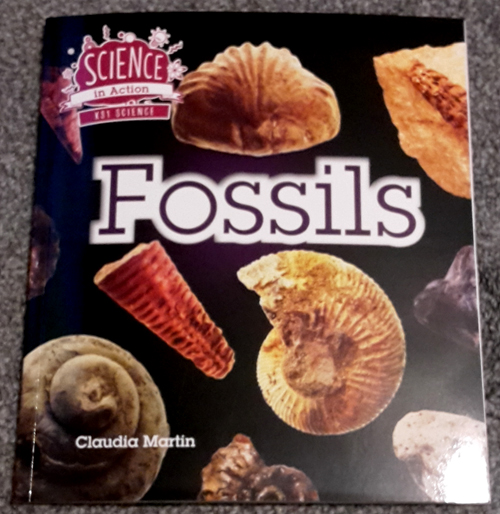
When we got home, I put out the Fossils book we have:
The museum doesn't open until 12pm on a weekend (I thought it opened at 10am ) so we arrived on campus half an hour before opening time... But alhamdulillah the weather was fine so we used the time for a quick trip down memory lane - we walked through the university centre (where everything was closed lol) and up the stairs to one of the lecture theatres, but it was locked! And past the Old Gym (which isn't so old anymore!) where my husband and I met. 💕😂 The campus was pretty much dead when we arrived but by midday lots of people started arriving - so we used all this for a short discussion about uni life and student habits. 😀
Inside Lapworth, we looked at all the skeletons on display - revising our work on herbivores/carnivores and using fossils for clues. F had recently asked if there were any flying dinosaurs to which I'd answered pterodactyl, and fortunately there was one on display hanging from the ceiling.
![]() |
| allosaurus cast |
![]() |
| pterodactyl cast |
![]() |
| allosaurus skull - feel its teeth! |
![]() |
| another carniverous dinosaur... |
![]() |
| hippopotamus skull |
Most of the exhibits just showed parts of the skeleton as opposed to the whole thing, eg the femur of a stegosaurus, so there were some good opportunities to revise bone names and find the equivalent on their own bodies.
Surprisingly for me though, the part of the museum they enjoyed the most was looking at all the different rocks and gemstones upstairs!
![]() |
| rock wall - feel and describe their textures! |
![]() |
| my favourite stone because it's my favourite colour~ |
![]() |
| their feedback in the bottom right! |
We managed to look around the whole museum comfortably in just over an hour. Definitely somewhere worth visiting again next time we're on campus or when it ties in with another topic inshaAllah!
When we got home, I put out the Fossils book we have:
I really like this book series, but this served as a reminder how careful we need to be with the educational material we give to our children - especially when it looks like a trusted source - since the last few pages of the book are dedicated to the theory of humans evolving from apes and present it as non-disputable fact:
I don't wish for the girls to grow up sheltered, so I thought since it came up we may as well discuss it. Rather than censor the page completely, I decided to stick some flaps over the top instead with the following:
So the girls can still see the information underneath, but they can treat it in the same way as they treat beliefs from other religions.
We also spoke a little about scientific theory and how the principle is correct, to have a prediction and look for evidence (just like we do for our experiments!), but how important it is not to have preconceived biases or we end up with the wrong conclusions.
Tuesday, 5 March 2019
Skeletons (& Fossils)
Following on from our work on teeth, I thought it made sense to look at the skeleton next!
We read through some books on the subject and talked about what they already knew.
Then, we worked through the following worksheets together:
Some notes about the pages...
1) I picked out a few bones I thought were the most prominent... I decided against naming the individual arm and leg bones at this point - it's enough for me for now they just recognise there are bones in their arms and legs! I deliberately left the lines off for them to draw themselves, so I could check their understanding more. Once they were done, I asked them how they could make their diagram clearer? M said straightaway to colour it in and F immediately chimed in with, "Like the teeth diagram last time!" 👍
2) The pictures at the bottom of this sheet are meant to be clues. So a blob, i.e. no structure (skeleton provides a frame and support), a shield, i.e. protection (it protects our soft internal organs), and a statue, i.e. no movement (skeleton has joints for movement).
3) MashaAllah, they guessed straightaway the bottom skeleton was a horse! There was some debate over which was the cat and which was the dog, but then they looked at the tails and both agreed the top one was the cat. 😁
4) I wanted to use this opportunity to practise their scientific thinking. We talked about dinosaurs being extinct so there are no real life examples around nowadays for us to look at, so how do we know what they were like? By using knowledge we have from other things as ideas (look at the animals alive today which are carnivores!) and looking carefully at e.g. the dinosaurs' skeletons for clues. For the question about the stegosaurus' tail, F said, "Maybe it used it for killing other animals..." to which I was impressed but thought I'd ask to check what she meant... Why would a herbivore want to kill other animals? "Because it wanted to give them to the tyrannosaurus to eat!" Lol. A bit more discussion about what the T Rex might have eaten and she came to a different conclusion herself. 😂
You can download our worksheets here.
While they were working through, I had the sudden inspiration to make gingerbread men but to decorate them by drawing skeletons with white icing. I explained my idea to them to see what they thought... What could we use to draw the skeleton with? Icing or white chocolate? They decided chocolate... But instead of gingerbread, what kind of biscuit should we make to make the white chocolate stand out? M said a black one. 😂 So I suggested chocolate... They agreed. 😋 I've not tried making chocolate shortbread before, but these turned out ok! Will make a separate post soon for the recipe, inshaAllah.
Finally, we made model skeletons using the template in the link above.
We did this activity on a different day as a kind of revision.
First, I asked the girls to colour their skeletons in but using a different colour for each different bone (and the same colour for bones which were the same!). As they coloured, we talked about which bone they were colouring to reinforce the new vocabulary, as well as casually introduce a few more (e.g. breastbone, shoulder plates, kneecaps, etc.). Even though teeth are part of the skeleton, they're not bones so not coloured in. 😁
Before they cut the pieces out, I explained what the end product was supposed to be and held the paper up to ask if they thought the material was strong enough... F said no, it was too flexible! 👍 So how could we make the paper stronger? F said to stick it onto card - so we did. After gluing the whole sheet onto a piece of A4 card, the girls cut the bones out.
I helped Z with her cutting, but she did all the colouring herself!
Once they were done, I asked the girls to lay their skeletons out flat, putting the bones together like a jigsaw.
Finally, I took out the split pins and demonstrated using one to join two of Z's pieces together. I used a sewing pin to make a small hole to make it easier to push the split pins through, then let the twins get on with putting their skeletons together by themselves. Z handed me pins and I asked for her approval before joining each piece. 😂
We read through some books on the subject and talked about what they already knew.
Then, we worked through the following worksheets together:
Some notes about the pages...
1) I picked out a few bones I thought were the most prominent... I decided against naming the individual arm and leg bones at this point - it's enough for me for now they just recognise there are bones in their arms and legs! I deliberately left the lines off for them to draw themselves, so I could check their understanding more. Once they were done, I asked them how they could make their diagram clearer? M said straightaway to colour it in and F immediately chimed in with, "Like the teeth diagram last time!" 👍
2) The pictures at the bottom of this sheet are meant to be clues. So a blob, i.e. no structure (skeleton provides a frame and support), a shield, i.e. protection (it protects our soft internal organs), and a statue, i.e. no movement (skeleton has joints for movement).
3) MashaAllah, they guessed straightaway the bottom skeleton was a horse! There was some debate over which was the cat and which was the dog, but then they looked at the tails and both agreed the top one was the cat. 😁
4) I wanted to use this opportunity to practise their scientific thinking. We talked about dinosaurs being extinct so there are no real life examples around nowadays for us to look at, so how do we know what they were like? By using knowledge we have from other things as ideas (look at the animals alive today which are carnivores!) and looking carefully at e.g. the dinosaurs' skeletons for clues. For the question about the stegosaurus' tail, F said, "Maybe it used it for killing other animals..." to which I was impressed but thought I'd ask to check what she meant... Why would a herbivore want to kill other animals? "Because it wanted to give them to the tyrannosaurus to eat!" Lol. A bit more discussion about what the T Rex might have eaten and she came to a different conclusion herself. 😂
You can download our worksheets here.
While they were working through, I had the sudden inspiration to make gingerbread men but to decorate them by drawing skeletons with white icing. I explained my idea to them to see what they thought... What could we use to draw the skeleton with? Icing or white chocolate? They decided chocolate... But instead of gingerbread, what kind of biscuit should we make to make the white chocolate stand out? M said a black one. 😂 So I suggested chocolate... They agreed. 😋 I've not tried making chocolate shortbread before, but these turned out ok! Will make a separate post soon for the recipe, inshaAllah.
Finally, we made model skeletons using the template in the link above.
We did this activity on a different day as a kind of revision.
First, I asked the girls to colour their skeletons in but using a different colour for each different bone (and the same colour for bones which were the same!). As they coloured, we talked about which bone they were colouring to reinforce the new vocabulary, as well as casually introduce a few more (e.g. breastbone, shoulder plates, kneecaps, etc.). Even though teeth are part of the skeleton, they're not bones so not coloured in. 😁
Before they cut the pieces out, I explained what the end product was supposed to be and held the paper up to ask if they thought the material was strong enough... F said no, it was too flexible! 👍 So how could we make the paper stronger? F said to stick it onto card - so we did. After gluing the whole sheet onto a piece of A4 card, the girls cut the bones out.
I helped Z with her cutting, but she did all the colouring herself!
Once they were done, I asked the girls to lay their skeletons out flat, putting the bones together like a jigsaw.
Finally, I took out the split pins and demonstrated using one to join two of Z's pieces together. I used a sewing pin to make a small hole to make it easier to push the split pins through, then let the twins get on with putting their skeletons together by themselves. Z handed me pins and I asked for her approval before joining each piece. 😂
Sunday, 3 March 2019
Teeth, teeth, teeth
Time to start a new Science topic! This half term, I wanted to do more about the human body - because the girls have started asking questions (How do we breathe? Why does exercise make me tired? What are our hearts for?) and it'll tick off a few of the NC targets for Year 2 to do with health, hygiene and living things.
To begin with, I thought we'd look at teeth because within the past couple of weeks F has got her first wobbly tooth (went to the dentist to make sure because I wasn't expecting it to happen for at least another year!) and M has got an adult tooth growing in behind her bottom incisors despite not having any teeth wobbly yet (yep, got the dentist to check this too and apparently very common! The adult tooth should force the milk teeth out, only rarely when it doesn't would they need to extract the baby teeth, so inshaAllah M won't need that to happen!) - lots of questions about what's going on in their mouths from them! So I thought it simplest just to do a couple of lessons on the subject instead of simply answering them. 😀
We began by looking through our science collection then working through the following sheets together:
You can download our worksheets here.
For the first sheet, the diagram of the teeth, I asked them how they could make it easier to understand (referring back to how we made a diagram of asteroids, comets and meteors), because it was already a drawing and it had labels... The answer was to colour it so all the same kinds of teeth were the same colour. When they were done they commented that it was really quick to see which kinds of teeth were where now. 👍
Subscribe to:
Posts (Atom)